 Fintel Analytics
Reverse ETL & Data Activation: Operationalise Your Warehouse in 2026
Your warehouse holds your best data — but it rarely reaches the tools where decisions get made. Here is how to fix that with reverse ETL and data activation.
Reverse ETL is the process of syncing clean, modelled data from your data warehouse back into the operational tools — CRMs, marketing platforms, support systems, finance applications — where your teams actually work. For early-stage companies that have invested in a warehouse and a dbt modelling layer, it is the missing link between analytics and action.
The problem it solves is not technical. It is behavioural. Your sales rep is not going to open BigQuery before a renewal call. Your customer success team is not going to run a SQL query to check which accounts have gone quiet. If the insight is not surfaced inside the tool they already live in, it does not change what they do. That is the core failure mode this post addresses — and it is one we see repeatedly in growth-stage companies that have done the hard work of building a solid data foundation, only to find that almost none of it is reaching the people who need it most.
What Is Reverse ETL — And Why Does It Matter Now?
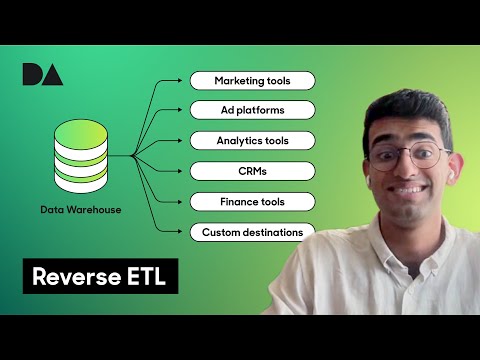
Reverse ETL (also called data activation, sync back, or unload) refers to the process of taking cleaned, transformed data from a central data warehouse and pushing it into operational systems used by business teams — CRMs, marketing tools, support platforms, and more. It is the logical counterpart to your ELT pipeline: if ELT brings data into your warehouse, reverse ETL takes the governed, modelled output and pushes it back out to where action happens.
Dashboards alone rarely change day-to-day behaviour. A sales rep does not want to open a BI report before every renewal call, and a finance analyst does not want to copy modelled revenue attributes from a warehouse into an ERP workflow by hand. Reverse ETL closes that last mile by taking the data models that analytics teams already trust and putting selected fields into the systems where frontline teams work.
The timing matters in 2026 because the tooling has matured significantly. Fivetran acquired Census in 2025 and then merged with dbt Labs in 2026, so one platform now spans modelling, movement, and activation in a single stack. The net effect for buyers is that reverse ETL is no longer a standalone speciality purchase — it is being absorbed into the core data stack. Which makes the architectural decisions you make now about how you model and govern your data considerably more important.

📺 Watch: What is Reverse ETL? (Explained by the Creator)
The Pattern We See Breaking Most Often: Insights That Never Leave the Warehouse
A pattern we see repeatedly in our work with Series A and Series B companies: the data team has done genuinely excellent work. The warehouse is clean. The dbt models are tested. The dashboards are accurate. And then you talk to the sales team, the CS team, the finance ops team — and they are all working from CSV exports, stale Salesforce fields that nobody maintains, and gut feel.
Your warehouse holds clean, transformed data — enriched customer segments, attribution models, predictive scores. But most of that value stays locked inside BigQuery or Snowflake. The data team built something genuinely useful and it went nowhere, because the activation layer was never built.
This is not a motivation problem. Sales teams live in their CRM — but the most valuable signals about a prospect often live in the warehouse, at the crossroads of systems that rarely talk to each other. Reverse ETL helps to bridge this communication gap. By enriching CRM records with product usage, feature adoption, lead scores, and behavioural intent, it enables sales to reach the right leads and start conversations that are both meaningful and well-timed.
The fix is not to train your sales team to use BigQuery. It is to build a governed activation layer that pushes the right fields to the right destinations on a schedule that keeps them current. That is the engineering problem reverse ETL solves.
How Does Reverse ETL Actually Work in a Modern Stack?
The architecture has three components:
1. The warehouse as source of truth Your dbt models define the metrics and dimensions that matter — customer health scores, product usage segments, outstanding invoice status, risk flags. Reverse ETL is designed to sync data from a warehouse or lake into operational systems. The warehouse acts as the source of truth where data is cleaned, modelled, and enriched. The activation layer consumes the output of those models — it does not duplicate the transformation logic.
2. The sync layer The Census model is familiar: define datasets from warehouse tables or queries, map fields into destinations, schedule syncs, monitor failures, and keep operational tools in sync with the warehouse. Tools like Hightouch, Census (now Fivetran Activations), and Bruin handle this layer. For teams already on Fivetran for ingestion, the acquisition of Census means the full pipeline — ingest, model, activate — can now run within a single vendor relationship.
3. The destination Reverse ETL tools sync modelled warehouse data to operational systems like CRM platforms, marketing platforms, and support tools, turning analytics insights into action. Destinations typically include Salesforce, HubSpot, Braze, Zendesk, Intercom, and ad platforms like Google and Meta. The sync can be row-level (push specific customer records) or segment-level (push audience lists).
One thing that experienced practitioners flag early: the activation layer is only as good as the models underneath it. If your dbt models are inconsistent, or if the same metric is defined differently in two places, you will push conflicting data into operational tools — and that erodes trust faster than doing nothing at all. Getting your semantic layer right before you activate is not optional. It is the foundation.
If you are looking to design this architecture end-to-end — from warehouse modelling through to operational activation — explore how Fintel Analytics approaches this. We work with growth-stage businesses globally to design and deliver exactly this kind of solution, with BigQuery, dbt, and warehouse-native activation built into the delivery from day one.
What Are the Highest-Value Activation Use Cases for Early-Stage Companies?
Not all activation use cases deliver equal ROI at Series A and B scale. Based on what we have shipped for clients, these are the ones that move the needle first:
Lead and account scoring into CRM Sales teams benefit when lead scores, account health metrics, and product usage signals appear directly in their CRM without manual exports or engineering requests. Reverse ETL can push lead scores to Salesforce, HubSpot, or Microsoft Dynamics 365 so reps see prioritised leads the moment they open their queue. Account executives get product usage data on their accounts without logging into a separate analytics tool.
For a B2B SaaS client we worked with, the sales team had been manually exporting product usage data weekly and uploading it to Salesforce by hand — a process that took over an hour each Friday and was frequently skipped. Building a daily automated sync of their warehouse-modelled usage scores into Salesforce custom fields eliminated that entirely. Within two weeks, the sales team was using the scores in their outreach prioritisation without any prompting.
Churn risk flags into customer success tools A typical use case: sync customers with high churn risk scores to a suppression list in your ad platform, then route them to a retention campaign in your email tool. The warehouse calculates the score. Reverse ETL delivers it where marketers can act. The same pattern applies to customer success: a CS manager should not need to open a dashboard to know which accounts are at risk this week — that signal should appear inside Intercom or Gainsight automatically.
Finance and operations enrichment Revenue operations teams can use data enrichment to add firmographic data, contract renewal dates, or expansion signals to CRM records, all synced automatically from the warehouse. For finance ops specifically, syncing modelled invoice aging, payment status, and FX-adjusted ARR into the tools your finance team uses daily — whether that is a spreadsheet via API, a Slack alert, or an ERP field — is among the highest-leverage activations we build.
For a global payments company we worked with, reconciliation status was being checked by opening a separate internal tool and cross-referencing manually. Activating warehouse-modelled reconciliation flags directly into their operations platform meant the ops team saw outstanding items in real time — inside the tool they were already using — without any extra steps.
Paid media audience activation In the 2026 Supermetrics Marketing Data Report, a survey of 435 marketers found that 41 per cent already feed first-party data into paid media as a standard activation use case, and reverse ETL is a common way they do it. Pushing warehouse-modelled suppression lists, lookalike segments, and high-LTV cohorts directly into Google and Meta ad platforms is increasingly standard — and it consistently outperforms manually maintained audience lists because the warehouse data is more current and more accurate.

Why Does Governance Matter More Than Tooling?
The most common mistake companies make when approaching reverse ETL is choosing a tool before establishing governance. When evaluating standalone reverse ETL versus an integrated platform, consider the governance implications. Standalone tools can operate outside your central data security framework, which may increase compliance risk and operational overhead for IT and data leaders.
In practice, this plays out in a few specific failure modes:
- Pushing unvalidated data to a CRM — if a dbt model has no tests, a failed upstream source can silently push nulls or stale values to Salesforce fields that your sales team trusts. 56% of data professionals cite poor data quality as a primary challenge in 2026, and activation amplifies quality problems because they now affect operational behaviour, not just a dashboard someone might notice.
- No clear data ownership — 44% of organisations report poor performance in data ownership alignment as their lowest organisational capability. Unclear ownership creates barriers to reverse ETL implementation and adoption. Successful deployments require collaboration between data, marketing, sales, and operations teams.
- Undocumented field mappings — when a dbt model is refactored, the field being synced to Salesforce breaks silently. Without documentation of which warehouse columns map to which destination fields, nobody catches it until a sales rep asks why their scores have all gone to zero.
The answer is not a more expensive tool — it is treating your activation layer with the same engineering rigour you apply to your pipeline. That means dbt tests on every model you plan to activate from, documented field mappings in version control, and alerting on sync failures. For more on how to build that kind of reliability into your pipeline, the post on Pipeline Incident Analytics: Stop Silent Data Failures in 2026 is directly relevant — the failure modes are identical.
How Do You Decide Whether to Build or Buy the Activation Layer?
For most growth-stage companies, the build-vs-buy decision on the sync layer is straightforward: buy it. The engineering cost of building and maintaining a reliable, multi-destination sync layer from scratch — including schema drift handling, incremental sync logic, retry behaviour, and monitoring — is significant, and it is not a source of competitive advantage. That time is better spent on the models that power the activation.
The decision that does require engineering judgement is where the transformation logic lives. A pattern we see repeatedly with early-stage companies is the temptation to push raw or lightly processed data to the activation tool and let it handle the transformation. This is almost always the wrong call. Transformation logic should live in dbt, in your warehouse, where it is version-controlled, tested, and visible. The activation tool should receive a clean, ready-to-use field value — not a formula.
According to the 2025 Data Integration & AI-Readiness Report, many organisations see their data teams spending more than half their time on repetitive tasks. Reverse ETL helps reduce that overhead by automating data delivery. The compounding benefit is significant: once an activation sync is built and tested, it runs without human intervention. The sales ops manager stops manually exporting CSVs. The CS team stops asking the data team for weekly churn lists. The finance team stops maintaining a parallel spreadsheet of outstanding receivables.
For companies building toward a Series A raise, this kind of operational automation also matters for a different reason: it is evidence that your data stack is producing business value, not just reports. Investors asking data questions during diligence want to see that insights are embedded in operational workflows — not sitting in a dashboard that three people look at. For a deeper look at how your data stack is evaluated under investor scrutiny, see our post on Why Your Data Stack Breaks Under VC Due Diligence.
Frequently Asked Questions
Q: What is the difference between reverse ETL and a CDP?
A: A Customer Data Platform (CDP) is typically an all-in-one system that ingests, unifies, and activates customer data. Reverse ETL is an activation layer that works with your existing warehouse as the source of truth — it does not replace your warehouse or your modelling layer. The composable CDP pattern uses reverse ETL to replicate much of what a traditional CDP does, without locking your customer data into a proprietary system.
Q: Do I need a reverse ETL tool if I already have dbt and BigQuery?
A: dbt and BigQuery handle transformation and storage — they do not push data to external systems. You need a reverse ETL or activation tool to sync your modelled warehouse outputs into CRMs, ad platforms, and operational tools. The two are complementary: dbt defines what to activate, reverse ETL handles the delivery.
Q: What are the most common reverse ETL use cases for B2B SaaS startups?
A: The highest-value use cases at early-stage scale are lead and account scoring into your CRM, churn risk flags into customer success platforms, and first-party audience segments into paid media. Finance ops enrichment — syncing invoice status, payment health, and ARR attributes — is also high-impact and often overlooked.
Q: How do I prevent bad data from being synced to operational tools?
A: Build dbt tests on every model you plan to activate from. Define row-level freshness expectations. Configure your activation tool to alert on sync failures rather than silently skipping records. And document field mappings so that when a model changes, the downstream impact is visible before the change ships.
Q: How long does it take to build a production-ready reverse ETL workflow?
A: A single well-scoped activation sync — for example, pushing a health score from BigQuery to Salesforce — typically takes one to three days to build, test, and document if the underlying dbt model already exists. The longer effort is almost always in the modelling layer: defining what the score means, agreeing on the business logic, and getting the relevant stakeholders aligned on how it will be used.
The businesses that get the most from their data infrastructure are not the ones with the most sophisticated models — they are the ones who have closed the loop between analysis and action. If your warehouse holds clean, trusted data that your sales, CS, or finance teams never see in the tools they use daily, that is a solvable problem. At Fintel Analytics, we have helped fintech, payments, and e-commerce businesses build exactly this kind of activation layer — from dbt model design through to production syncs with full monitoring — and the operational impact is consistently one of the fastest paybacks we deliver. If your team is ready to make their warehouse work harder, we would like to hear from you.